
Wrist & Hand Conditions
Radiocarpal Joint
The Wrist / Radiocarpal Joint
Wrist and hand pain often develops from overuse, repetitive movements, strain, or sudden injuries such as falls, and can make everyday tasks like typing, gripping, or lifting difficult. At Movement Perfected, we provide expert wrist and hand pain physiotherapy in Moorgate and Marylebone clinics, helping you identify and address the underlying cause of your symptoms rather than just managing the discomfort. Common conditions include tendonitis, carpal tunnel syndrome, ligament sprains, and joint irritation, all of which we treat using tailored, evidence-based rehabilitation programmes designed to reduce pain, restore strength and dexterity, and prevent recurrence.
View other conditions
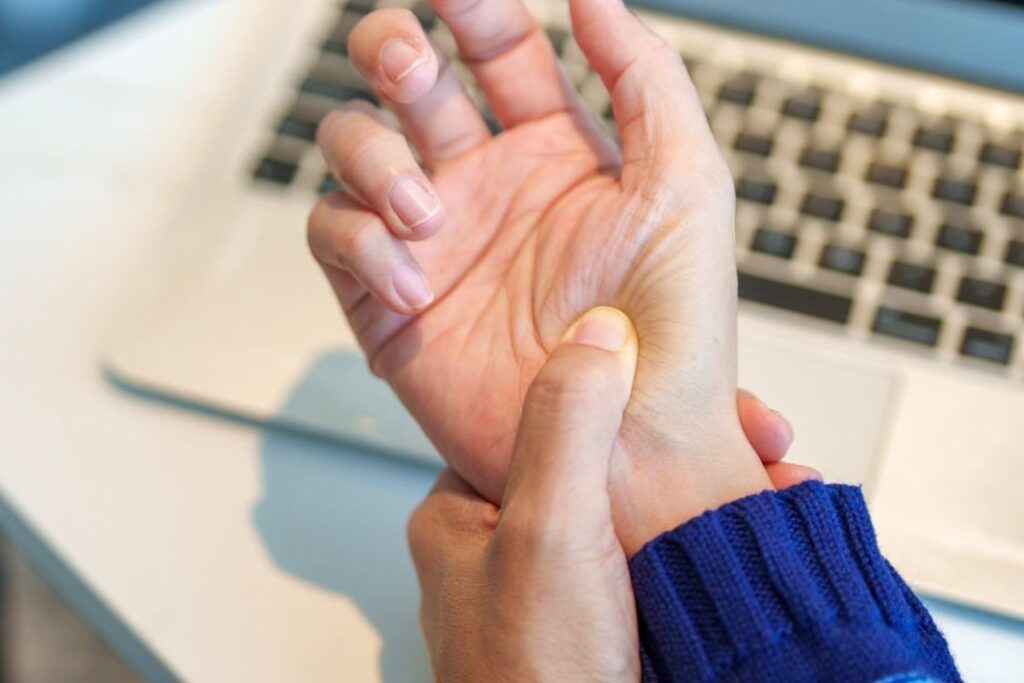
Common Wrist / Hand Conditions:
• Wrist sprains
• Tendinopathies (e.g. De Quervain’s)
• Carpal tunnel syndrome
• Guyon’s canal syndrome
• Thumb base (CMC) arthritis
• Finger joint sprains
• Trigger finger
• Overuse / load-related wrist pain
• Post-fracture stiffness and rehab
Click on a condition to jump to it’s section on the page
Wrist Sprains
A wrist sprain happens when the ligaments (strong, rope-like tissue connecting bones) in your wrist are stretched or strained, usually after a fall, a sudden twist, or a direct hit. You might notice pain, swelling, stiffness, or a weaker grip. Physiotherapy helps by easing pain, improving movement, and slowly building up strength and stability so you can get back to your usual activities and sports safely.
Wrist Tendinopathies (Including De Quervain’s)
Wrist tendinopathies happen when the tendons that move and support your wrist and thumb become irritated or overused. A common type is De Quervain’s tenosynovitis, which causes pain on the thumb side of your wrist, especially when you grip or lift things. Physiotherapy helps by managing how much you use the tendon, building strength, and making movement more comfortable.
Carpal Tunnel Syndrome
Carpal tunnel syndrome happens when the median nerve gets squeezed as it goes through your wrist. This can cause tingling, numbness, pain, or weakness in your thumb, fingers, or hand, often worsening at night or after prolonged use. Physiotherapy helps calm nerves, improve how your wrist and hand move, and address posture and how much you use your hands..
Guyon’s Canal Syndrome
Guyon’s canal syndrome occurs when the ulnar nerve is compressed at the wrist, leading to numbness, tingling, or weakness in your ring and little fingers. Do you rest your palms on handlebars for long rides, or spend lots of time with pressure on your wrists while cycling or working at a desk? If so, you might be at higher risk. Physiotherapy helps by making the nerve less sensitive, improving how you move, and changing activities if needed.
Thumb Base (CMC) Arthritis
Thumb base arthritis affects the joint at the bottom of your thumb, causing pain, stiffness, and a weaker grip or pinch. Activities like opening jars or holding objects can make it worse. Physiotherapy helps manage pain, protect the joint, build strength, and improve how your hand works.
Finger Joint Sprains
Finger joint sprains occur when the ligaments around a finger are stretched too much, often from a hit, twist, or sports injury. You might feel pain, swelling, and stiffness. Physiotherapy helps you recover by getting your finger moving again, reducing swelling, and building strength and control to avoid lasting stiffness. or thumb catches, locks, or clicks during movement due to irritation of the tendon sheath. Symptoms may include pain, stiffness, or difficulty straightening the finger. Physiotherapy aims to reduce irritation, improve tendon movement, and support comfortable hand function.
Overuse or Load-Related Wrist Pain
If your job keeps you at a keyboard all day, or if you use your wrists a lot for work, workouts, or hobbies, it’s smart to think about preventing wrist pain before it starts. Repetitive wrist use without adequate rest can lead to overuse pain, which often develops gradually and can affect anyone who spends long hours typing, lifting, or using their hands for tasks. Physiotherapy is not only for rehab. It can help you stay a step ahead by teaching you how to manage what your wrists handle each day, build strength and endurance, and improve how you move—all to keep wrist pain from happening in the first place or from coming back.
Trigger Finger
Trigger finger occurs when a tendon in your finger becomes irritated and inflamed, causing the finger to catch, lock, or feel stiff when you try to move it. Without treatment, symptoms can persist and make gripping or everyday tasks uncomfortable. Physiotherapy provides a step-by-step plan to reduce irritation, improve movement, and restore strength, helping you return comfortably to work, hobbies, and daily activities
Post-Fracture Wrist Stiffness
It’s common for your wrist to feel stiff after a fracture, especially if it was kept still for a while. Without rehab, you might keep having trouble moving it, feel weak, or have discomfort. Physiotherapy provides a step-by-step plan to restore your movement, strength, and confidence, so you can safely return to work, sports, and daily activities.